Choosing the Right Hanging Scales for Your Needs

application/hanging-scales-weighing-scales, application/hanging-scales-weighing-scales, 
Inquiry
Inquiry

hanging scales weighing scales

Hanging scales, also  known  as weighing scales,  are  essential tools for accurately  measuring weights in  various industrial applications. These devices  are particularly important for purchasing managers, engineers, and product managers  who need reliable data for quality control,  logistics, and inventory management. , we will explore how  to choose  the right  hanging scales  for your specific needs,  identify  trustworthy suppliers,  compare specifications, provide  installation guidelines, and discuss key considerations when  sourcing  these essential  tools.

Where to Find Reliable Suppliers of High-Quality Weighing Scales

Where to Find Reliable Suppliers of High-Quality Weighing Scales

Finding trustworthy suppliers is crucial for ensuring that  you  receive high-quality hanging scales  that meet your specifications. Start by researching manufacturers with  a solid reputation in the industry, such  as  JIANGXI JINGCE SENSING  TECHNOLOGY CO.,  LTD., which specializes in high-precision load cells and force sensors.  Look for  companies with CE and RoHS certifications, as these  indicate  compliance with international safety  and environmental standards.

Utilize industry networks, trade shows, and online B2B marketplaces to connect  with potential suppliers. Reading  customer  reviews and testimonials can also provide insights into the reliability and performance of their products. Furthermore, consider  requesting samples to  assess the  quality  and functionality of the scales before placing a bulk order.

How to Compare Specifications of Various Weighing Scales

How to Compare Specifications of Various Weighing Scales

When comparing hanging  scales, focus on key  specifications that impact performance. Important factors include:

Load Capacity: Ensure the scales  can handle the maximum weight you intend to measure without compromising  accuracy. Look for a margin of safety  above your expected  loads.

Accuracy: Check the  scale’s resolution and accuracy specifications. For industrial applications,  a resolution of 0.1% or better is generally recommended.


Material: The construction material affects durability and suitability for specific  environments. Stainless steel  is commonly  used for its corrosion resistance, while aluminum  is lighter and may be appropriate for less demanding applications.

Power Source: Determine whether  the scales are battery-operated or  require a power outlet. Battery-operated models offer portability, while wired models may  provide continuous operation without  the need for battery replacement.

Features: Advanced features, such as tare functions, data logging,  and connectivity options (like Bluetooth or Wi-Fi), can enhance usability and integration into  existing systems.

 
Guidelines for Installing Hanging Scales in Industrial Settings

Guidelines for Installing Hanging Scales in Industrial Settings

Proper installation of  hanging scales is critical for accurate measurements and long-term reliability. Here are some  guidelines  to follow:

Location: Choose  a stable and secure location for installation. Ensure there is enough overhead  clearance for the  load to hang freely without obstruction.


Mounting: Use  robust mounting hardware  that  can support the scale’s weight  capacity. Ensure that the mounting surface is level and capable of  handling dynamic loads.

Calibration: After installation, calibrate the scales according to the manufacturer’s  instructions. Regular calibration is necessary to maintain  accuracy, especially if the scales are frequently used or  moved.

Environmental Considerations: If the scales will be exposed to harsh conditions, consider protective measures such as enclosure or shielding to prevent  damage from  dust, moisture, or chemicals.


Training: Ensure that  staff members are  trained on how to operate and maintain the scales properly, including how to interpret readings and perform routine checks.

What to Consider When Sourcing Weighing Scales for Your Projects

When sourcing hanging  scales for specific projects, keep the following considerations in mind:

Customization: Determine  if you require customized  features, such as specific load capacities  or unique measurement units. Manufacturers like JIANGXI JINGCE SENSING TECHNOLOGY CO., LTD. often offer OEM/ODM solutions tailored to client needs.

Minimum Order Quantities (MOQ): Be aware of MOQ requirements set by  suppliers, as this can  impact your procurement strategy,  especially for smaller projects.

Lead Time: Discuss lead times with suppliers to ensure that delivery aligns with your project schedule. Factors such as production capacity and  shipping times  can vary significantly between manufacturers.

Quality Assurance: Inquire about the  supplier’s quality control processes. Reliable manufacturers perform rigorous testing to ensure that their  scales meet industry standards and specifications.

Support and Warranty: Evaluate the  level of customer  support offered by the  supplier and the warranty terms for the scales. A good warranty can provide  peace of  mind and protect your investment.

By following these guidelines, you can make informed decisions  when selecting hanging scales that meet  your  industrial needs while ensuring you work with reputable suppliers for optimal  performance and reliability.

Choosing the Right Hanging Scales for Your Industrial Applications

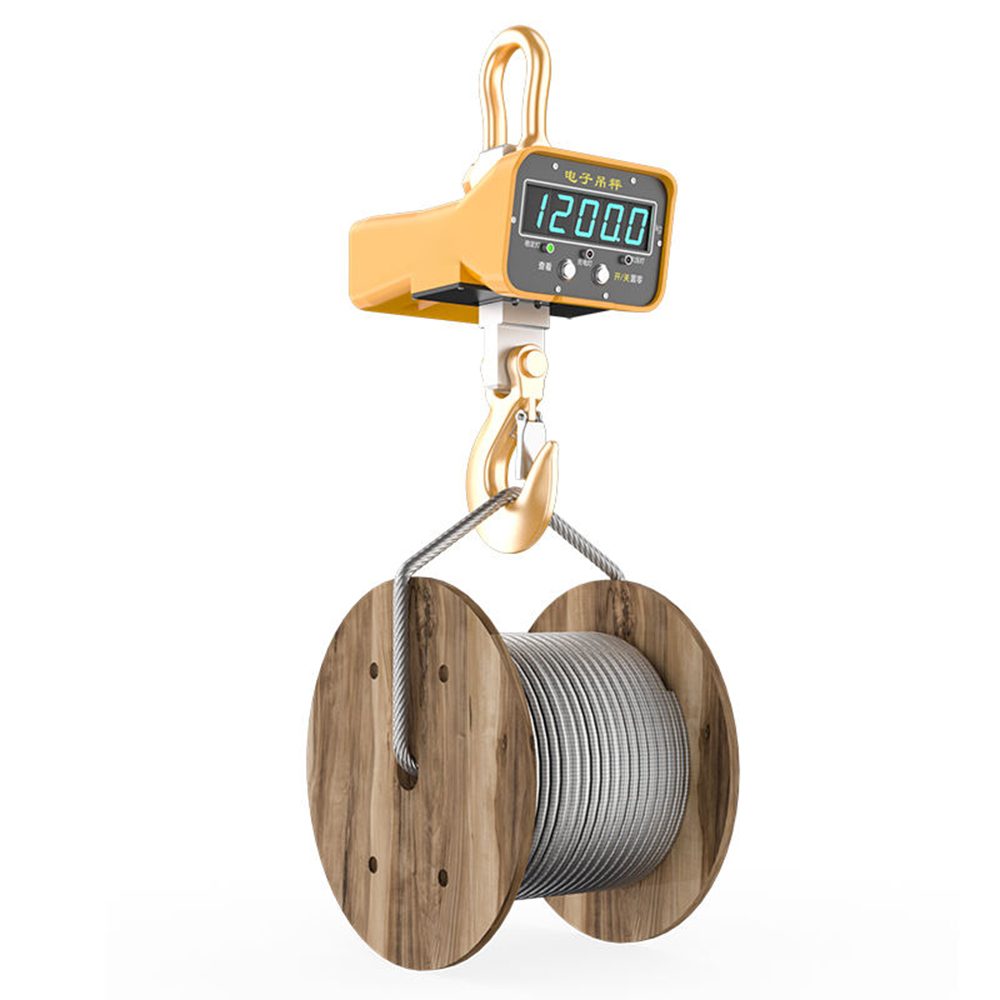
Selecting the appropriate hanging scales involves assessing several factors, including the intended application, load capacity,  and precision  requirements. For instance,  if you  need to measure heavy loads in  a  manufacturing environment, opt for  scales with a higher load  capacity and durable  construction. High-precision models are essential in laboratory settings  where accuracy is critical.


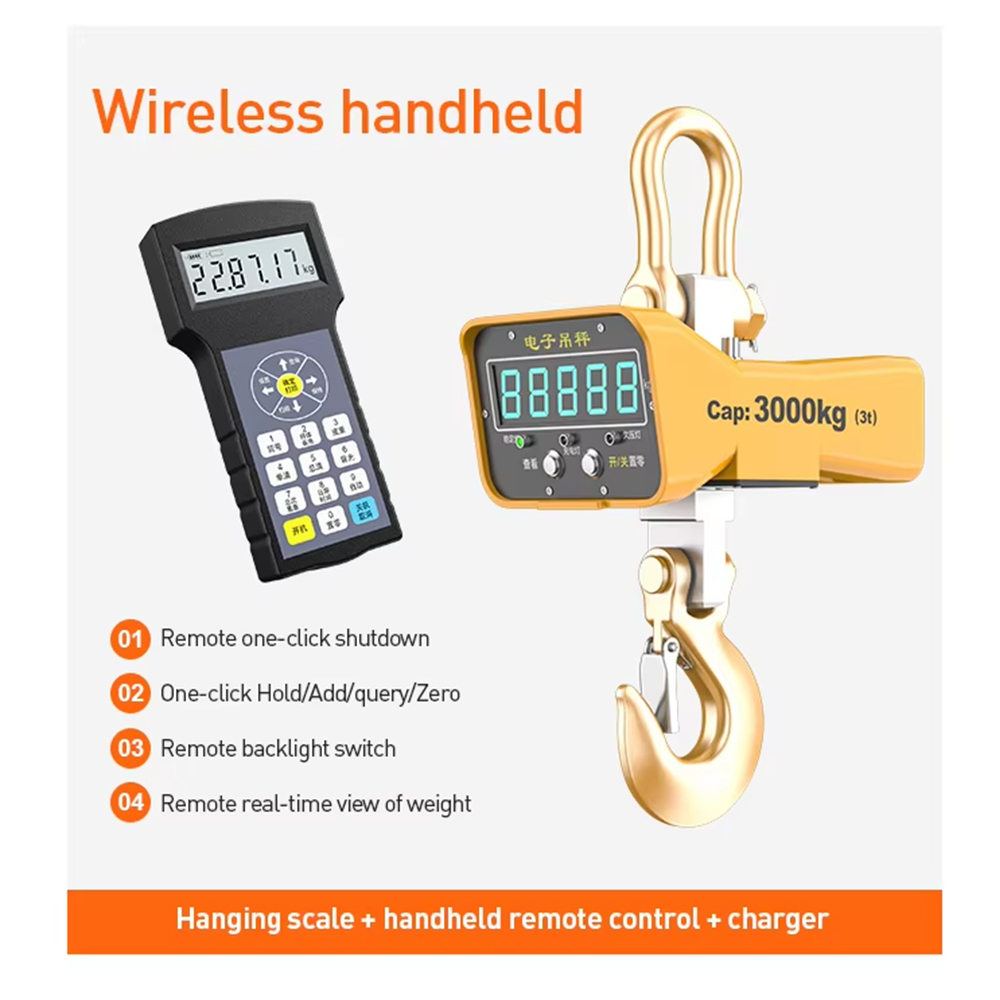
Consider the environment where the scales will be used. If they will be exposed to moisture, dust, or chemicals, look for scales with appropriate IP ratings  or protective  housing. Additionally, wireless options  may  enhance  convenience and  safety by  eliminating  the need for trailing cables, thereby  reducing trip  hazards in busy workspaces.

Frequently Asked Questions

What is the weighing capacity range of the hanging scales?

Our hanging scales support a wide range of capacities, from low-kg precision models up to several tons, depending on the load cell selected. We offer customized ranges for lifting and industrial weighing applications.
Yes. We provide models integrated with or compatible with wireless dynamometers and force sensors for remote monitoring and data transmission.
Our hanging scales and components carry CE and RoHS certifications and are manufactured under strict quality controls to meet industrial accuracy and safety requirements.
Absolutely. We offer OEM/ODM services, including customized load cell calibration, housing, capacities, and communication interfaces for specific industry needs.
They are ideal for lifting, weighing, automation, and new energy sectors, including crane scales, material handling, production lines, and testing setups.

Get a Free Quote

Our representative will contact you soon.
0/1000